

We’ve all experienced it. You’re driving along when suddenly a warning light appears on the dashboard. Some lights simply tell you that a particular system is operating. Others, however, can indicate a fault that needs attention and in some cases, continuing to drive could risk further damage or compromise your safety.
Modern cars have more sensors and electronic systems than ever, so understanding dashboard warning lights can help you recognise when something needs checking.
Here are some of the most common warning lights and what they could mean.
What Do the Different Dashboard Warning Light Colours Mean?
As a general guide, dashboard warning lights use a colour system to indicate how urgently you may need to act.
Red warning lights can indicate a potentially serious problem that requires immediate attention. If a red warning light appears while driving, find a safe place to stop and investigate the issue.
Amber or yellow warning lights generally indicate a fault that requires attention. You may not always need to stop immediately, but you should arrange for the vehicle to be checked as soon as possible.
Green, blue or white lights generally provide information or indicate that a particular system or function is operating.
However, symbols and meanings can vary between manufacturers and models. Therefore, always check your vehicle handbook if you’re unsure.
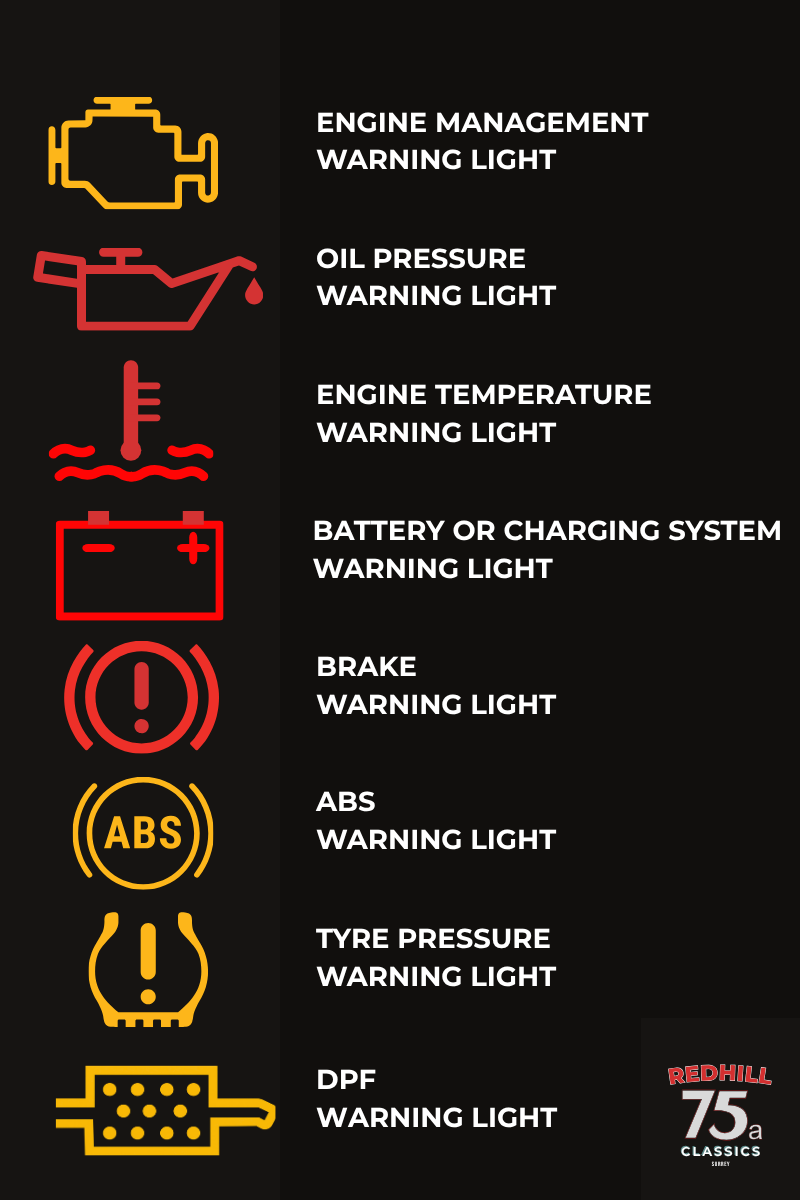
1. Engine Management Light
The engine management light sometimes called the check engine light, is one of the most familiar dashboard warning lights. It can appear for many different reasons, ranging from a sensor or electrical fault to problems involving the engine or emissions system.
You may also notice symptoms such as:
- Reduced power
- Rough running
- Difficulty accelerating
- Increased fuel consumption
- Unusual engine behaviour
Because so many different faults can trigger this light, a diagnostic check can help identify the underlying cause. If the light appears alongside poor engine performance or starts flashing, don’t simply continue driving and hope it disappears. Seek professional advice.
2. Oil Pressure Warning Light
The oil pressure warning light usually resembles an oil can and should never be ignored. It can indicate that the engine doesn’t have sufficient oil pressure to lubricate its internal components properly. Continuing to run an engine without adequate oil pressure could cause serious engine damage. If the oil pressure warning light appears while you’re driving, stop somewhere safe and switch off the engine.
3. Engine Temperature Warning Light
An engine temperature warning light can indicate that the engine is overheating.
Possible causes include:
- Low coolant
- A coolant leak
- Cooling fan problems
- Thermostat faults
- Water pump problems
If your engine begins overheating, continuing to drive can cause significant damage. Therefore, stop safely and allow the vehicle to cool. Never remove the coolant cap while the engine is hot because the cooling system may contain pressurised hot coolant.
4. Battery or Charging System Warning Light
The battery symbol doesn’t necessarily mean that the battery itself has failed. Instead, it can indicate a problem with the vehicle’s charging system. For example, there could be an issue with the alternator, wiring, electrical connections or battery.
If the charging system stops working correctly, the vehicle may eventually lose electrical power. Therefore, you should have the problem investigated as soon as possible.
5. Brake Warning Light
A red brake warning light requires attention. Sometimes it simply indicates that you’ve left the handbrake engaged. However, if the light remains illuminated after releasing the handbrake, it could indicate another problem within the braking system. Because brakes are fundamental to vehicle safety, don’t ignore changes in braking performance or warning lights.
If you’re unsure whether the vehicle is safe to drive, seek professional advice rather than taking a risk.
6. ABS Warning Light
ABS stands for Anti-lock Braking System.
If the ABS warning light remains illuminated, the vehicle may have developed a fault within the system. Your conventional brakes may still operate, depending on the fault, but the anti-lock function may not work as intended. Therefore, arrange for the vehicle to be inspected and diagnosed.
7. Tyre Pressure Warning Light
Many modern vehicles use a Tyre Pressure Monitoring System (TPMS). If the warning light appears, one or more tyres may have lost pressure. However, the monitoring system itself can also develop a fault.
Check your tyres as soon as it’s safe to do so.
Look for:
- Low tyre pressure
- Visible damage
- Punctures
- Unusual tyre shape
Correct tyre pressure plays an important role in braking, handling, tyre wear and fuel efficiency.
8. DPF Warning Light
If you drive a diesel vehicle, you may encounter the Diesel Particulate Filter (DPF) warning light. The DPF helps capture soot from the exhaust gases. However, it needs to regenerate periodically to clear accumulated soot.
Frequent short journeys can sometimes make this process more difficult because the vehicle may not reach the conditions required for regeneration. A DPF warning doesn’t always mean that the filter needs replacing. However, ignoring repeated warnings can potentially lead to a more expensive problem. If the warning remains illuminated, arrange for the vehicle to be checked.
Don’t Just Turn the Warning Light Off
A dashboard warning light is a symptom, not necessarily the problem itself. Simply clearing a fault code or resetting a warning light doesn’t fix the underlying issue. Modern vehicle diagnostics allow a technician to read fault codes and investigate the systems involved. From there, they can identify what has triggered the warning and determine whether repairs are necessary.
What Should You Do When a Warning Light Appears?
First, don’t panic. Pay attention to the colour of the warning light, how the vehicle is behaving and whether any other warnings have appeared. If you see a red warning light or notice a significant change in the way the vehicle drives, find somewhere safe to stop.
For amber warning lights, consult your vehicle handbook and arrange an inspection if required. Most importantly, don’t repeatedly ignore a warning because the car still appears to drive normally. Identifying a problem early can sometimes prevent a relatively straightforward repair from developing into something more serious.
Not Sure What Your Dashboard Warning Light Means?
At Redhill Classics, we work on everything from everyday run-arounds and family cars to cherished classics. If a warning light has appeared on your dashboard or your vehicle simply doesn’t feel quite right, we can help investigate the cause and advise you on what needs attention.
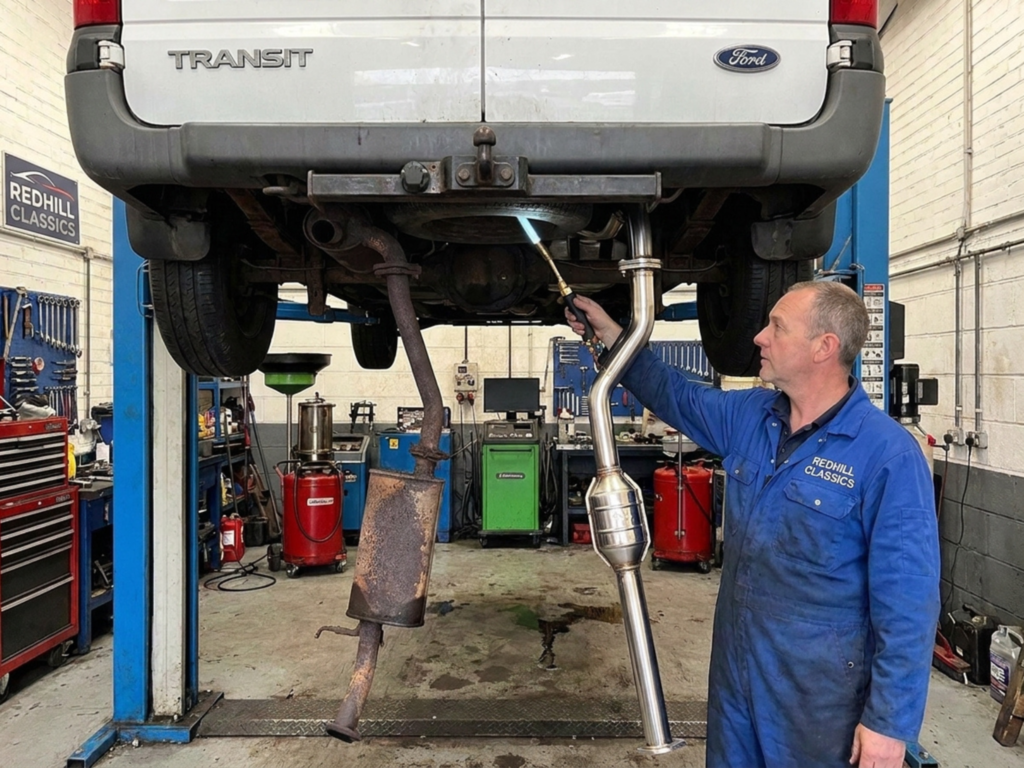
From vehicle servicing and diagnostics to repairs, exhaust work and specialist stainless-steel fabrication, our team can help keep your car running safely and reliably.
Got a warning light you’re worried about? Get in touch with Redhill Classics and we’ll help you get to the bottom of it.